
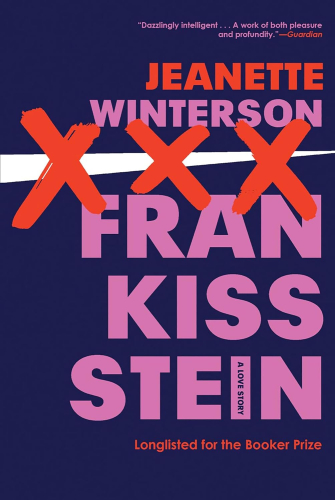
There are some people who are so overwhelmingly obsessed with stories that it's they can do to tell them. I have now read 3 of Jeanette Winterson's books, and this is my third time writing a blog for them. As near as I can tell, they are all about the same thing. It feels like Winterson is infatuated with the idea of a story and telling it. Everything comes back to stories. This story, this retelling of a retelling, is rather aware of what that might be like. At the end of Mary Shelly's Frankenstein, Dr. Frankenstein dies on board a ship in the north pole. But is he really dead? I've heard his story. You likely have to. Who knows how many people have opened a copy of his story and read, "I am by birth a Genevese; and my family s one of the most distinguished of that republic." Frankenstein has trouble dying. Maybe you read the 1818 text, or the 1831 text. Maybe you watched the James Whale film, or the Del Toro film. Maybe you read Frankissstien.
Point being that no matter how many times Victor creates life, spurns it, and dies he is always going to being creating life and always having died. And what of all the other Frankensteins, are they also always becoming and always unbecoming? Is Frankissstein's AI enchanted Victor Stein just as trapped? He wants to live forever, as a scanned copy in a computer. Victor Frankenstein could go on and on forever.
It is reminiscent to me of The Third Policeman. I won't talk more about it here, it's a very good book. You should read it! Just don't read the introduction first because it spoils the book. (Not sure who gave the green-light on that.) Dracula Daily also reminds me of this. Every year your good friend Jonathan Harker has the worst year of his life. A bit like he's stuck in a time loop (Tumblr loves this reading).
If Winterson is so obsessed with stories it makes sense that she would get to this idea eventually. Stories, for the most part, exist to be told. And if all you can think about are stories then at what point are you telling the story or are you just another?
I have a story to tell you. I have a story I need to tell you. I need to tell it to you over and over. I have a story to tell you.
I have a story that is stuck in me. I cannot remove this story but I have to give it to you. I can't remember what happens in it. I know that it happens over and over. I need to tell you about it, this story, the one inside my mind. Or in my heart. My liver. My stomach. I can feel it thrashing around inside me. I need help. This story is stuck inside me. I need to tell you this story. This story is full of characters. Or the characters are filling up the story. The characters in the story, they need to move forward. They all have a story. They share it with each other but no one hears anyone else's story. A clamor of storytelling. My story is the most important. My story is the one that needs to be told. The story I am telling needs to be told. All of the stories overlap and become each other. In my story I am walking forward. In my story I am going to lay down. In her story she is laying forward. In her story she is going to walk down. I have to tell you this story. There is a story inside you as well. The story inside you can be told. The story I am going to tell you is about this story I am going to tell you. In telling you this story I am telling you about my story. The characters are telling you their stories and they do not love it. I love telling you stories. I am telling you stories. I am telling you stories. This is a story.
Jeanette Winterson, Frankissstein: a love story. New York: Grove Press, 2019. Koller-Collins PR6073 .I558 F73 2019
