
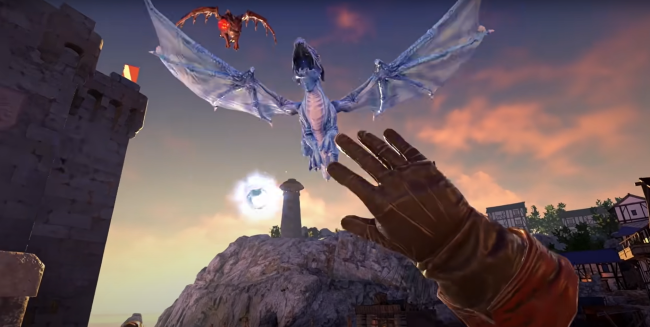
Close your eyes and imagine yourself going toe to toe with a fire breathing dragon. That would be quite the extraordinary rush of adrenaline; beyond anything you have ever experienced I would imagine. Transporting yourself into this fantastical world would be quite the encounter. You would find yourself in a stage of fight, or flight, or perhaps a combination of them all; and once you’ve come back from your literal out of this world experience, you might find yourself appreciating the lack of fire breathing dragons in our world more (or maybe you loved them for a reason I could not explain and have a newfound longing for them). Think about how much us as individuals can change if we were able to create and partake in these unreal experiences that could span across an infinite amount of scenarios. Virtual reality (VR) is our current pathway for such an idea that immerses and expands emotions.
Virtual reality creates new realms of highly immersive entertainment, industrialization, and thinking that extend beyond the modern day philosophy of corporeality, while simultaneously attempting to imitate reality. It is in this idea that the true strength of VR may not be found in allowing individuals to experience a perfectly immersive physical existence in another setting, but instead in allowing individuals to break the boundaries of physical existence. Virtual experiences that push beyond reality have the capacity to create altered perceptions of body and heightened emotions that can initiate or continue a growth in mentality and morality of the individual engaged in said experiences.
Consider my own encounter with virtual reality in FLY. In this experience the user is able to fly through Earth and explore locations extending from the ground to areas at the edge of space, thus breaking free from the physical restraints of travel. To have a greater understanding of this experience, take a look at the following video, Fly Release Trailer (Early access) (Fly), where a brief introduction that highlights the experience itself and what one will see is given. My own personal encounter with this experience was engrossing and brimming with heightened emotions of shock and awe, such that FLY overwhelmed me with the endless possibilities of exploration. Even in just the beginning of the experience I felt I could not fathom the next decision to make. After I got my bearings and the indecisiveness out of the way I found myself experiencing more than just surprise and wonder as I visited various locations; nostalgia was felt when I visited my hometown in Oregon empowering me to call home later that day; sympathy occurred when I saw my mother’s home country of Trinidad and Tobago struggling with natural disaster leading to more interest in organizations like Engineers without Borders. Fly was empowering for me on the basis of allowing for an immersive experience where I got to break past physical limitations and instead get new perspectives on locations I would never acquire in reality. My personal encounter conveys this idea of changes in action and mindset when one surpasses physical limitations in a manner where emotions are exposed and strengthened. These benefits of surpassing reality are not only found in my own experience.
Slater and Sanchez-Vives wrote an article titled, Enhancing Our Lives with Immersive Virtual Reality, that provides insight into the various uses of virtual reality and the benefits and limitations that come with the specific uses. Slater and Sanchez-Vives specifically argue that the power of virtual reality is not in its ability to produce a “faithful reality” (Slater and Sanchez-Vives), but rather in its capability of going beyond reality. It is mentioned that individuals can still feel realistic emotions without the VR scenario being realistic, conveying that “VR dramatically extends the range of human experience” (Slater and Sanchez-Vives). This gives reason to the idea that virtual reality has power in going beyond the normal human experience, allowing for new encounters that may be able to alter an individual. Slater and Sanchez-Vives continue to expand on this idea and share the perspective of this paper with further research on specific phenomena.
The two researchers found body immersion (seeing the VR body as your own, no matter what it is) is still capable within highly unrealistic scenarios. Individuals can find
themselves completely immersed in the bodies of their favorite movie/video game characters, animals, and more through VR, altering their standard perception of body. There is power found in this extension of reality. Consider a quote implored by Slater and Sanchez-Vives: “being able to change your own definition is actually part of a practical
(Oloman) application” (Barlow et al., 1990). This quote from Barlow et al demonstrates that virtual reality has the capacity to provide new unrealistic experiences where individuals can see themselves as something else and develop new emotions and/or feelings and that there is strength in this. Hence, VR and the unrealistic escapades that come with it have the power to change individuals.
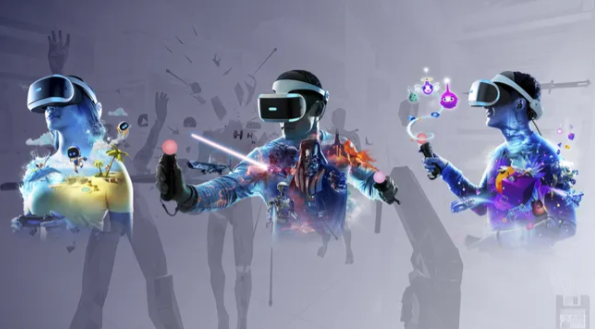
Virtual reality’s power rests in its capability to both create heightened emotions and alter perception of the body, which ignites change in the mentality and morality of people. An individual is able to have new ideas formed that call for action or change a mindset by receiving strong emotions that relate to a specific situation through an experience that extends beyond the individual’s reality. It is also possible for an individual to find a changed outlook in life through seeing themselves in a different body through altered body immersion, such that one can take their own mind and immerse it into another perspective. As a result, we may find less discrimination, more awareness of biases and prejudice, and other moral boosts to individuals and societies. It is essential to emphasize the strength virtual reality has in being able to break physical limitations, such that society and our world can capitalize on the benefits of viewing virtual reality in a way that escapes reality.
Works Cited:
Barlow, J., Dyson, E., Leary, T., Bricken, W., Robinett, W., Lanier, J., et al. (1990). “Hip, hype and hope – the three faces of virtual worlds (panel session),” in ACM SIGGRAPH 90 Panel Proceedings (Dallas, TX: ACM), 1001–1029. (As Cited by Slater, and Sanchez-Vives)
Dragon Tower VR (2018, December 26). Xtreme Action Park. YouTube. https://www.youtube.com/watch?v=ahvFMB6WgyQ
Fly. (2023, December 7). Fly Release Trailer (Early Access). YouTube. https://www.youtube.com/watch?v=MUFLbArrMVc
Oloman, J., Delaney, M., Gerblick, J., Sheridan, C., Donnelly, J., & Gould-Wilson, J. (2022, January 10). The 15 Best VR Games You Can Play Right Now. gamesradar. https://www.gamesradar.com/best-vr-games/
Slater, M., & Sanchez-Vives, M. V. (2016). Enhancing Our Lives with Immersive Virtual
Reality. Frontiers in Robotics and AI,3. https://www.frontiersin.org/journals/robotics-and-ai/articles/10.3389/frobt.2016.00074/full
Image Sources:
Headline Image
Image 1
