
Investigating how virtual reality can help researchers better understand stress and emotional regulation in young people
Mt. Hope Family Center clinicians work with youth who often experience high levels of stress and emotional activation. For many young people, especially those who have experienced trauma, calming the body after stress can be difficult. Techniques like guided breathing are widely used to help regulate the nervous system, but there is still much to learn about what types of visual and sensory cues are most effective for supporting regulation.

As part of the Karp Library Fellowship, Tamuda Chimhanda is leading a project in collaboration with Studio X, iZone, and the Mt. Hope Family Center to explore how virtual reality (VR) can be used to study and support emotional regulation in youth. The project is conducted under the guidance of Jennie Noll, the executive director at Mt Hope Family Center, whose work focuses on child trauma and development.
The Idea
Virtual reality (VR) offers a unique opportunity to create controlled environments where we can carefully test how different visual experiences affect the body’s stress response. Unlike traditional interventions, VR allows us to isolate and manipulate specific elements of an experience while keeping everything else constant.
For this project, we designed a calming, nature-themed VR environment where participants are guided through a breathing exercise. While the breathing task remains the same, we vary the type of visual stimulation present in the environment. This allows us to compare different regulation conditions and better understand how visual cues influence stress recovery.
Participants first complete a brief cognitive stress task (e.g., math problem) designed to elevate physiological arousal. Afterward, they enter the VR environment and follow a guided bubble-breathing exercise intended to help them regulate their breathing and return to a calmer state.
Across different versions of the experience, we introduce variations such as smooth rhythmic visual motion, irregular visual stimulation, or environmental distractions. By comparing these conditions, the research team hopes to better understand which visual mechanisms most effectively support stress recovery.
To capture these effects, physiological signals such as heart rate will be monitored using wearable sensors. The VR system records precise timestamps during the experience, allowing researchers to synchronize physiological data with specific moments in the virtual environment.
Why This Matters
Understanding how young people regulate stress is an important part of improving trauma-informed care. While breathing exercises and bilateral stimulation techniques are commonly used in therapeutic settings, there is still limited research on how immersive environments can support these methods.
This project aims to generate early evidence about how visual design choices within VR may influence emotional regulation. By identifying which types of visual stimulation help the body calm down more effectively, researchers and clinicians can begin to design more targeted digital tools to support youth mental health.
Importantly, the goal is not simply to create a calming VR experience, but to test specific mechanisms in a controlled and measurable way.
Progress So Far
Over the past several months, the project has progressed through multiple phases of research, experimentation, and design. Initial work began last semester with foundational research on VR-based interventions for stress regulation, along with guidance from Yasmin Mattox, who helped establish a grounding in key psychological concepts relevant to trauma, stress, and emotional regulation.
This phase also included early experimentation and exploration of VR experiences in collaboration with post-doc researcher Hannah Swerbenski, which helped surface important considerations around usability, accessibility, and how youth might interact with immersive environments. In parallel, interviews and ongoing conversations with clinicians at Mt. Hope Family Center, including Catherine Elliott, provided critical insight into the real-world challenges youth face and the types of tools that would be practical and appropriate in a therapeutic setting.
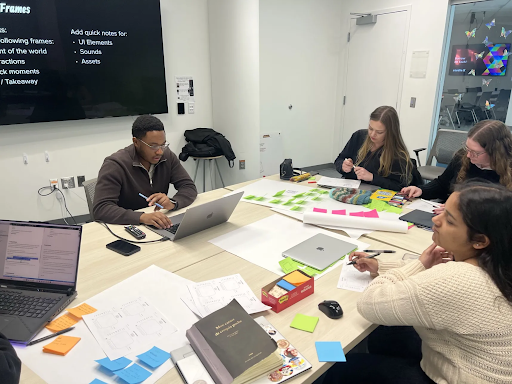
Building on this foundation, the project moved into a structured design thinking workshop with the Mt. Hope team, where ideas were refined and translated into a more focused intervention concept. These sessions helped align clinical needs with technical possibilities and directly informed the design of the VR experience.
The current VR prototype, developed in Unity, includes:
- A nature-inspired virtual environment designed to feel safe and calming
- A guided bubble-breathing visualization to support paced breathing
- Multiple experimental conditions introducing different visual stimulation patterns
- System logging to capture precise timing markers for research synchronization
At this stage, the core experience is functional, and the project is nearing the end of the prototyping phase. The next step is to begin testing, where the research team will evaluate how participants respond across conditions and identify which approaches most effectively support stress regulation.
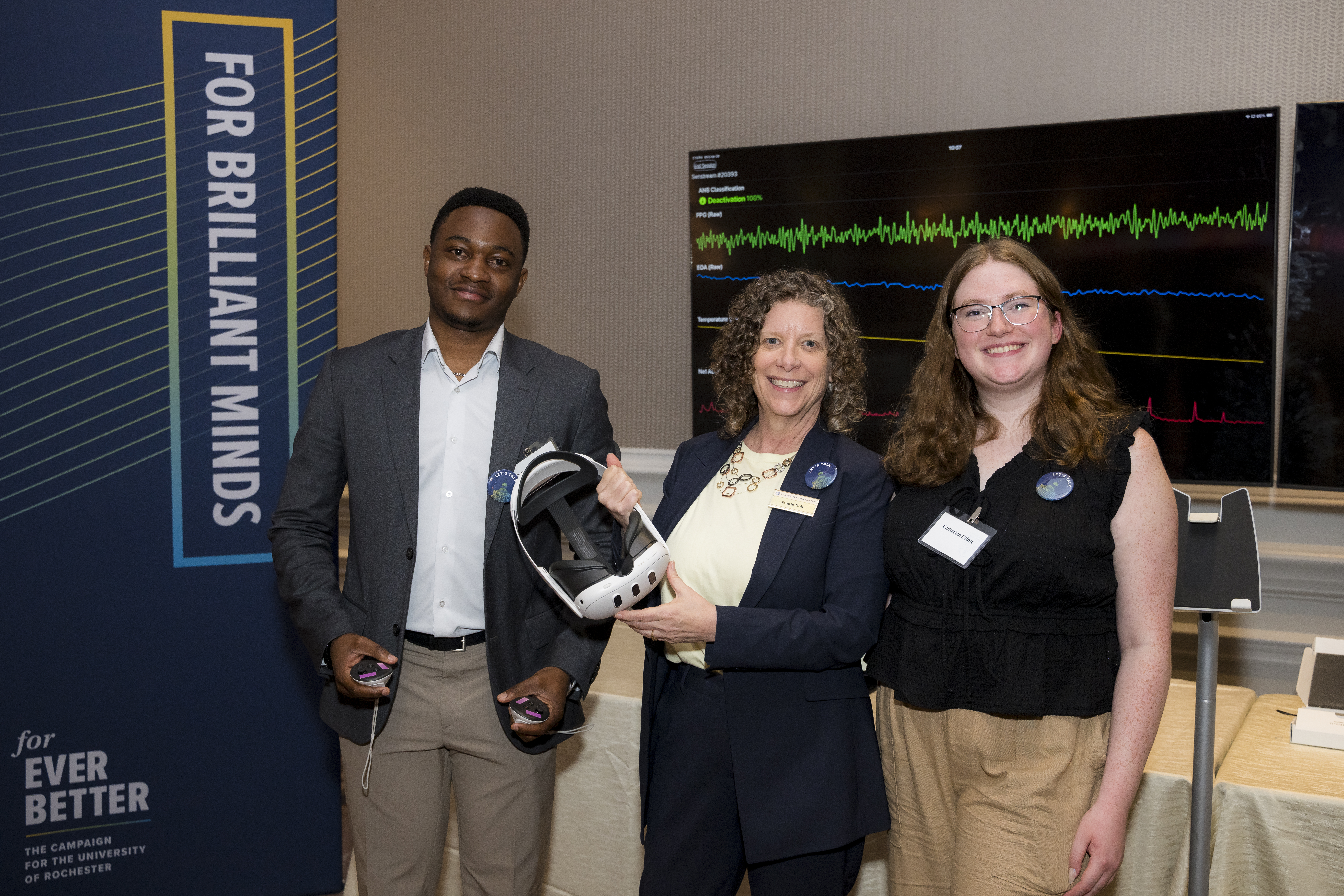
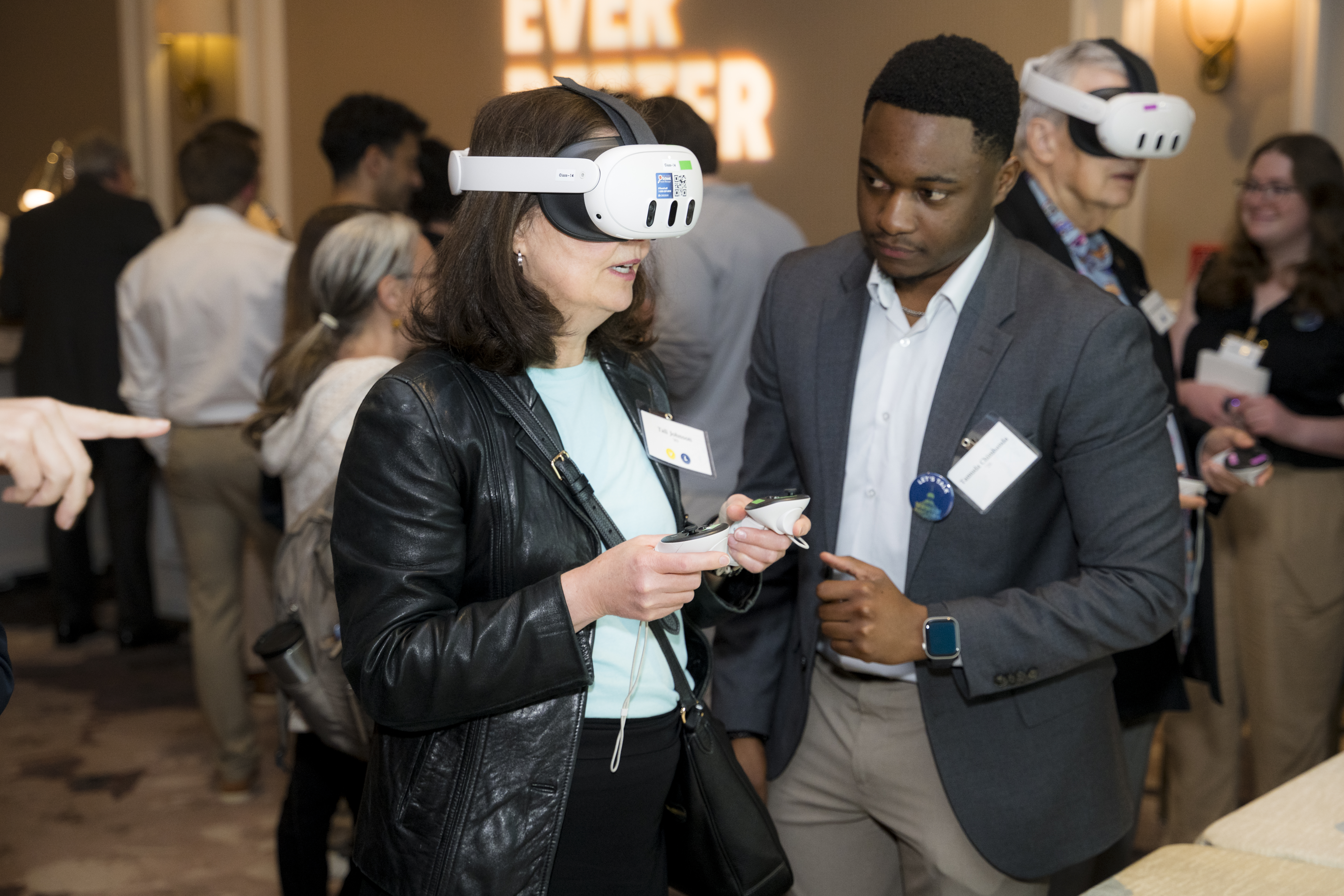
In late April, Tamuda accompanied the Mt. Hope team to the For Ever Better DC Campaign Launch, where he helped facilitate demos of the project and engaged directly with participants, gaining valuable insight into how users responded to the experience and collecting feedback to help guide future development.
Looking Ahead
The next stage of the project will focus on experimental testing and data collection. While still in the early stages, the project represents a promising step toward understanding how immersive technologies can contribute to the future of trauma-informed care.

